
The Rise of Spatial Computing: How Next-Gen AR & VR Are Reshaping Work and Play
For decades, human interaction with computers was strictly limited to physical screens—monitors, laptops, and smartphones. In 2026, spatial computing has emerged as the next evolution of personal technology. By blending virtual interfaces seamlessly into physical environments, spatial devices are changing how we work, communicate, learn, and entertain ourselves.

Table of Contents
What Is Spatial Computing?
Spatial computing is an umbrella term for technologies that allow computers to blend digital content with the physical world in three dimensions. Unlike traditional Virtual Reality (VR) that isolates the user, or basic Augmented Reality (AR) overlays on smartphones, modern spatial computing uses advanced sensors, eye tracking, and hand gestures to make digital elements behave as if they exist physically around you.
Rather than being constrained to a 15-inch or 27-inch monitor, users can spread infinitely many virtual windows, 3D models, and apps across their actual living room or workspace.
This technology relies heavily on advanced spatial audio, real-time depth mapping, and intuitive gesture control, completely bypassing the need for physical mice or bulky external handheld controllers.
Spatial computing shifts our digital environment from a flat 2D screen into an expansive 3D canvas bounded only by our physical surroundings.
Redefining Work and Productivity

The workplace is undergoing its biggest transformation since the arrival of remote working tools. Spatial computing allows professionals to set up multi-monitor workstations anywhere—whether in a small room, coffee shop, or hotel.
Remote collaboration has also become far more engaging. Instead of looking at flat video tiles in traditional conference apps, remote teams can sit together as life-sized avatars in shared virtual spaces. Architects can walk inside 3D blueprints, product designers can sculpt virtual physical models, and medical teams can analyze complex volumetric data together in real time.
By removing the limit of physical screen space, knowledge workers can organize context, research, and workflows naturally around their immediate spatial environment.
Key Workplace Advantages
Unlimited virtual monitor space, highly realistic 3D collaboration, seamless multi-tasking using eye-tracking and gestures, and reduced hardware footprint for travel.
Next-Generation Entertainment & Immersive Media

Beyond office productivity, spatial computing is revolutionizing media consumption and gaming. Movies can now be viewed on virtual screens as large as a commercial movie theater, complete with spatial audio that tracks movement in real time.
Live sports events offer volumetric viewing, allowing fans to watch a basketball game from courtside or examine real-time match statistics floating on their coffee table.
In gaming, developers are moving beyond simple 2D frames to create fully interactive spatial worlds. Gamers can physically interact with objects, duck behind physical furniture, and experience environments that blend directly into their actual homes.
Media is changing from something we passively watch on a screen to an environment we step into and interact with directly.
Education and Virtual Training
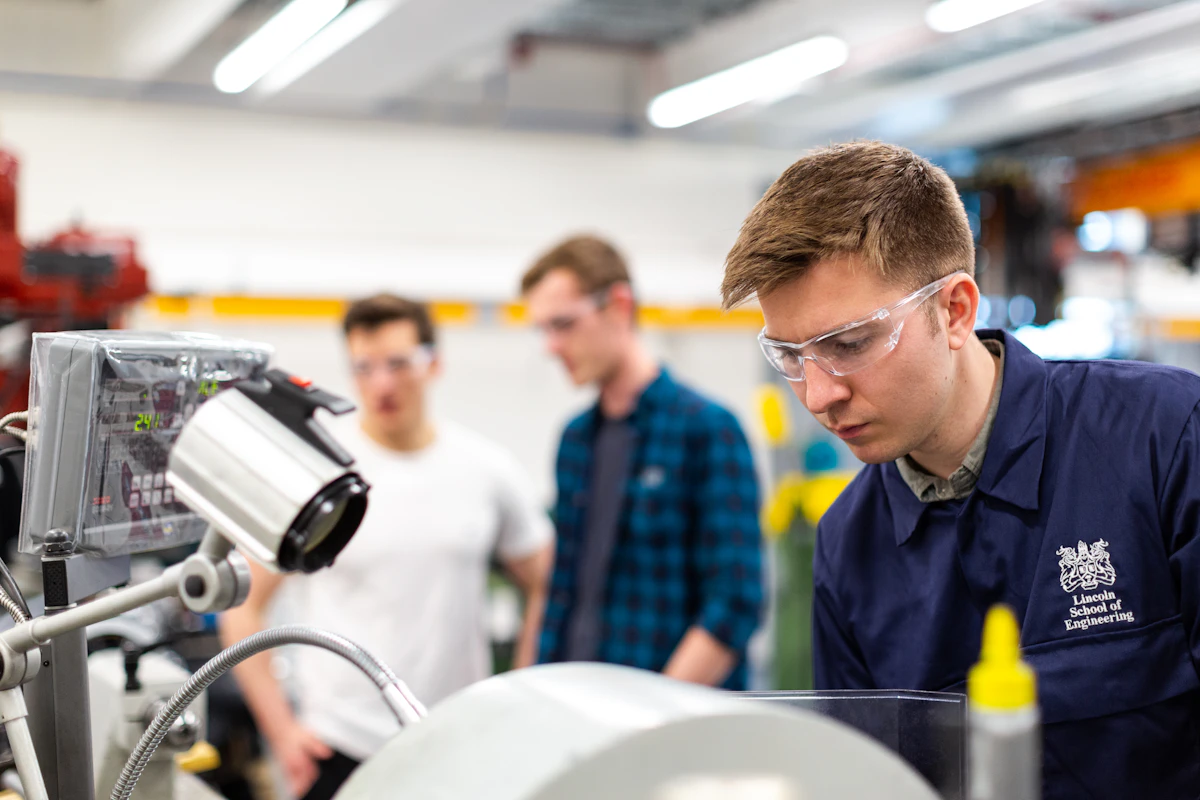
In educational institutions and corporate training programs, spatial computing provides safe, repeatable, and realistic environments for hands-on learning.
Medical students can perform virtual dissections or surgical simulations without physical risk. Engineering students can tear apart jet engines or observe chemical reactions at a molecular scale in mid-air.
Because human memory is strongly connected to spatial awareness, learning complex physical tasks through 3D interaction leads to higher retention rates compared to reading textbook pages or watching video tutorials.
Popular Spatial Learning Applications
Virtual medical dissections, interactive STEM simulations, flight training, hazardous industrial equipment safety drills, and historical site walkthroughs.
Key Challenges and What Lies Ahead

Despite its rapid growth, spatial computing still faces several technological and social challenges. Headset weight, battery life, display thermal management, and price points remain key focus areas for hardware manufacturers.
Privacies and data security are also critical considerations. Devices equipped with multiple cameras and depth sensors collect precise spatial data about users' private living spaces and eye movements, requiring robust privacy controls and clear data governance policies.
As hardware becomes lighter, cheaper, and visually similar to regular eyeglasses, spatial computing is expected to gradually complement—and eventually replace—traditional flat screens across many everyday digital activities.
Frequently Asked Questions
What is the difference between Spatial Computing and traditional VR?
Traditional VR fully replaces your vision with a artificial environment. Spatial computing blends digital elements with your real physical room, anchoring 3D apps and content directly into your actual surroundings while allowing you to remain aware of your environment.
Do I need a separate computer to use spatial headsets?
Many modern spatial computing devices operate standalone with powerful onboard processors, high-resolution displays, and dedicated operating systems. Some can also connect wirelessly to external PCs or Macs for extra computing power.
Can spatial computing replace traditional multi-monitor desktop setups?
Yes. Many professionals already use spatial headsets to create virtual multi-screen workstations with flexible window sizing and customizable positions without needing physical monitors.
Is spatial computing safe for long-term daily use?
Manufacturers design modern headsets with high refresh rates and ultra-low latency to minimize eye strain and motion sickness. However, taking regular breaks during long work sessions is still recommended.
Final Thoughts
Spatial computing represents a fundamental shift in how humans interact with digital information. By expanding software from flat rectangles into our physical environments, it opens up intuitive possibilities for work, education, and entertainment. As hardware becomes lighter and more accessible, spatial interfaces will likely define the future of computing for decades to come.